Updated August 2026 | Authored by Scott Engle, Broker DRE #01332676 | Realty Management Group | Serving San Diego County Since 2005
Spring Valley is two rental markets wearing one name. The northern core, ZIP 91977, is dense, apartment-heavy, and softening, averaging $2,670 per month, down 8.2% over the last year. The southern Jamacha and Sweetwater Springs corridor, ZIP 91978, is larger-lot single-family homes averaging $3,550, and RentCast reported it moving the opposite direction, up 18.7% year over year, though on a much thinner listing sample. Price a 91978 house against the 91977 apartment average and you can underprice it badly. On a covered property that gap then locks into the AB 1482 baseline for the length of the tenancy.
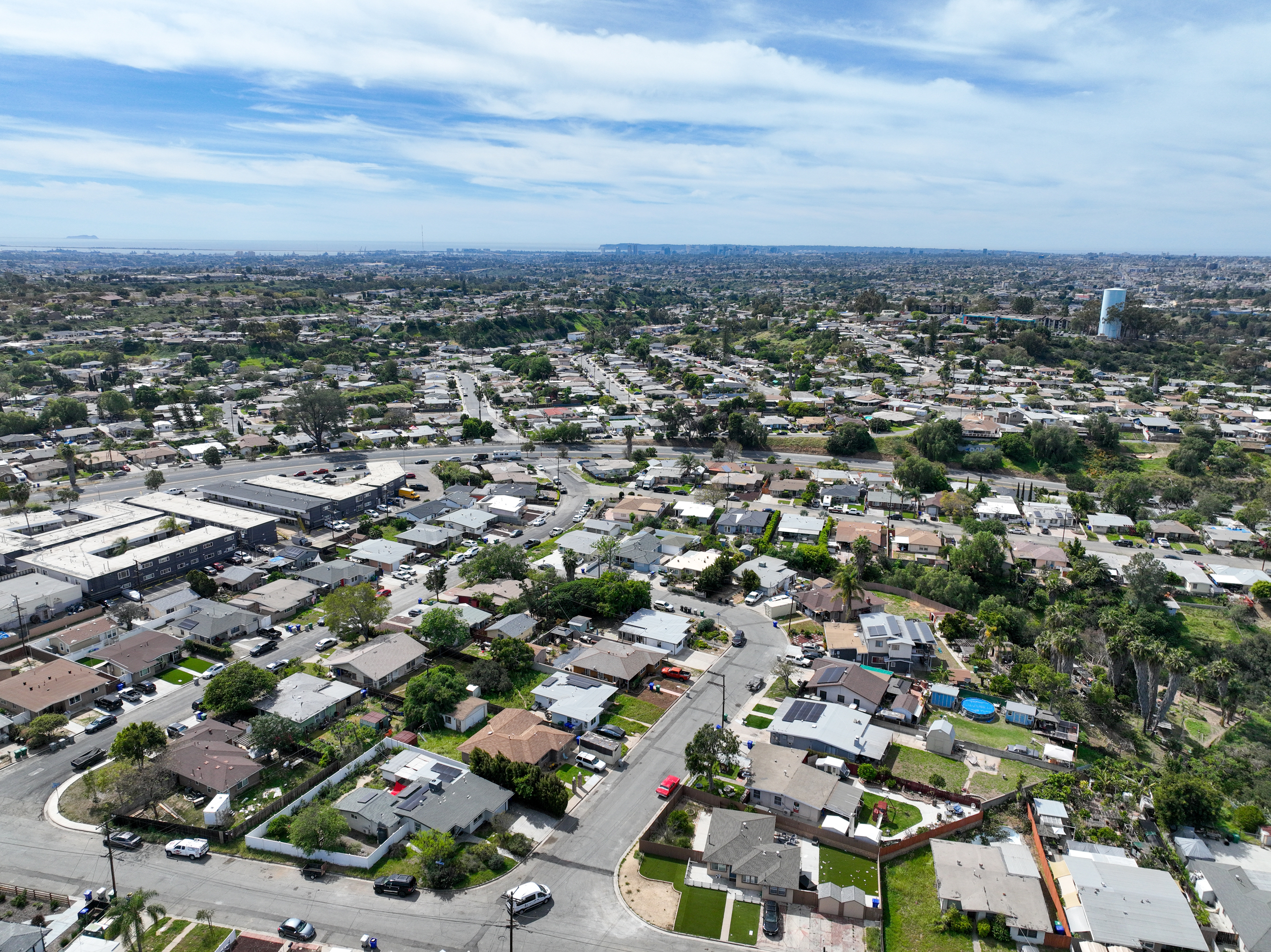
Spring Valley is an unincorporated community in San Diego County, California, covering ZIPs 91977 and 91978, about 10 miles east of downtown San Diego via State Route 94. Housing stock is predominantly 1950s through 1980s. Because it is unincorporated, there is no city government and no municipal tenant protection ordinance layered over state law. San Diego County has not adopted a rent-cap or just-cause ordinance for unincorporated areas, so California's statewide AB 1482 provides the applicable rent cap and just cause framework with no additional local layer. That makes the rules simpler than in the City of San Diego or Chula Vista, both of which layer a municipal ordinance on top of state law. State landlord-tenant law still applies in full, and the documentation obligations are no lighter.
In RMG's Spring Valley portfolio, vacancy has historically been less of a problem than the operational risks hidden in older housing. The losses that do show up come from below-market pricing at move-in, missing AB 1482 exemption notices, and deferred maintenance that turns a routine repair into a habitability claim.
Quick Answer
What is the average rent in Spring Valley in 2026? It splits sharply by ZIP. 91977, the northern core, averages $2,670 per month, down 8.2% over the year. 91978, the southern Jamacha corridor, averages $3,550 per month on larger single-family homes. RentCast reported an 18.7% year-over-year increase for 91978 in July 2026, although the small active listing sample makes that figure unusually volatile. Source: RentCast, July 2026.
How much can a landlord raise rent in Spring Valley in 2026? On a property covered by AB 1482, the cap is 8.2% for increases with an effective date from August 1, 2026 through July 31, 2027. That is 5% plus 3.2% CPI, using the BLS San Diego-Carlsbad twelve month change ending March 2026. Up to two increases are permitted in a twelve month period, and their cumulative total cannot exceed the cap. Properly exempt properties have no state cap on the amount, though Civil Code §827 notice timing still applies.
Does Spring Valley have rent control? No. Spring Valley is unincorporated San Diego County, and neither a city nor the County has adopted a municipal rent-cap or just-cause ordinance covering it, so state AB 1482 applies with no additional local layer. Whether a particular property is covered by AB 1482 still depends on its type, ownership, and exemption status.
Is Spring Valley incorporated? No. Spring Valley is an unincorporated community governed by San Diego County rather than a city, so no municipal tenant protection ordinance applies and the state AB 1482 notice is sufficient on its own.
Does AB 1482 apply in Spring Valley? To most properties, yes. The predominantly 1950s through 1980s housing stock means few units qualify for the rolling fifteen year new construction exemption. A single-family home or condominium may be exempt if the owner is not a real estate investment trust, a corporation, or an LLC with a corporate member, and the written exemption notice was given as the statute requires.
What is the maximum security deposit in Spring Valley? One month's rent, furnished or unfurnished, under AB 12 effective July 1, 2024. A narrow small landlord exception allows up to two months.
What does property management cost in Spring Valley? Advertised monthly rates among San Diego County percentage-based managers run 7% to 10% of collected rent, plus a placement fee at turnover and often a renewal fee, per RMG's review of published company pricing. Realty Management Group charges a flat $199 per month with none of those add-ons.
Market rent figures: RentCast for Spring Valley ZIPs 91977 and 91978, July 2026. The 91978 corridor is a thin-inventory submarket, roughly a dozen active listings, so its averages move sharply month to month. Treat them as directional and verify current comparables before pricing.
The AB 1482 rent cap is 8.2% for increases with an effective date from August 1, 2026 through July 31, 2027. The date that controls is the effective date of the increase, not the date the notice is served. A notice served in July that takes effect in August must use the current figure. The cap resets every August 1, so any figure carried over from a prior twelve month period is expired, and a notice calculated on an expired figure exceeds the legal limit.
On This Page
- Spring Valley rent by ZIP: 91977 vs 91978
- Key terms every Spring Valley landlord should know
- Spring Valley landlord laws: 2026 requirements
- The real risk: older housing stock, not vacancy
- Why Spring Valley owners fall behind market rent
- RMG in Spring Valley, by the numbers
- Management cost in Spring Valley
- Frequently asked questions
- Sources and methodology
Spring Valley Rent by ZIP Code: 91977 vs. 91978 (2026)
| Unit type | 91977, north core | 91978, Jamacha corridor |
|---|---|---|
| Average, all units | $2,670 (down 8.2%) | $3,550 (see note below) |
| Studio | $1,600 | Not published |
| 1 bedroom | $1,750 | $2,200 |
| 2 bedroom | $2,270 | $3,300 |
| 3 bedroom | $3,650 | $3,480 |
| 4 bedroom | $4,130 | $4,620 |
Source: RentCast, July 2026, ZIPs 91977 and 91978. The 91977 figure is drawn from a deep listing pool. RentCast reported an 18.7% year-over-year increase for 91978 in July 2026, but that ZIP carries roughly a dozen active listings, which makes the percentage unusually volatile and not comparable in reliability to the 91977 figure. Use the 91978 dollar levels and treat the percentage as directional only.
91977, north and core
Bancroft Drive, Sweetwater Road, and the Casa de Oro edge. The denser, apartment-heavy, more affordable half, with the oldest housing stock in the community, roughly 1950s to 1975. Two bedroom units make up the largest share of active listings, and the most maintenance risk concentrates here. This is where pricing discipline matters, because the market softened.
91978, south and the Jamacha corridor
Jamacha Boulevard and Sweetwater Springs, including Calavo Gardens near Rancho San Diego. Larger lots, newer builds roughly 1970s to 1990s, and rents reaching $5,850 on larger homes. Thin inventory, about a dozen active listings, which makes this the ZIP where underpricing off a blended Spring Valley average costs the most.
Spring Valley's two ZIPs moved in opposite directions over the past year. RentCast reported 91978 up 18.7% on roughly a dozen active listings, and 91977 down 8.2% across a much deeper pool. Those two percentages are not equally reliable, and neither is a price you should set rent at. What they establish is that a single Spring Valley average describes neither submarket, and that a landlord pricing a Jamacha corridor home off the softer north-side figure is likely to leave money on the table. On a covered property, an under-set rent is then locked in until turnover.
Bottom line: price to live comparables for the ZIP and the unit type, not to a community-wide average.
Which ZIP is your property actually in, and what should it rent for?
We will benchmark it against live 91977 or 91978 comparables for your unit type and confirm whether it is AB 1482 covered or exempt. Free, written, no obligation.
Get My Free Rental AnalysisKey Terms Every Spring Valley Landlord Should Know
AB 1482, the Tenant Protection Act. California's statewide rent cap and just cause law. It limits annual increases on covered units to 5% plus regional CPI, never more than 10%, and requires just cause to end a tenancy after 12 months of occupancy. Codified at Civil Code §§1947.12 and 1946.2.
The AB 1482 exemption notice. The written notice, in the statute's prescribed wording, that a landlord must give to claim the single-family home or condominium exemption from the rent cap and just cause rules. For any tenancy commenced or renewed on or after July 1, 2020 it must be in the rental agreement. Without it, the owner cannot rely on that particular exemption, and the property is subject to the rent cap and just cause rules unless some other exemption applies. Adding the notice to a new or renewed lease establishes the exemption going forward.
Falling behind market, the rent gap. When rent drifts below current comparables, the AB 1482 cap limits how fast the gap can ever be closed, so an underpriced Spring Valley home can take several years of maximum annual increases to catch up. The two-tier market makes this easy to miss if you benchmark against the wrong ZIP.
Unincorporated status. Spring Valley has no city government, and San Diego County has not adopted a rent-cap or just-cause ordinance for unincorporated areas, so state AB 1482 applies with no additional local layer. The state notice that is insufficient on its own in the City of San Diego or Chula Vista is complete here. That simplification does not reduce documentation duties under AB 1482, AB 12, AB 2801, AB 2493, AB 2747, or AB 628.
Spring Valley Landlord Laws: 2026 Compliance Requirements
Spring Valley's unincorporated status means state law provides the governing framework with no municipal ordinance on top. San Diego County has not adopted a rent-cap or just-cause ordinance for unincorporated areas, and the City of San Diego's ordinance stops at the city limits. The most common failure here is not misunderstanding the rules. It is assuming simpler compliance means less documentation discipline. Ordinance status verified against County and City sources, August 2026.
AB 1482, rent cap and just cause. The maximum allowable increase is 8.2% for any increase with an effective date from August 1, 2026 through July 31, 2027. That is 5% plus 3.2% CPI, using the BLS San Diego-Carlsbad twelve month change ending March 2026. The statute references April, but no April figure is published for San Diego, so the March-to-March fallback applies. Civil Code §1947.12(a)(2) permits up to two increases in a twelve month period, provided the cumulative total does not exceed the cap. Just cause is required once a tenant has occupied the unit for 12 months. The exemption notice must be in the rental agreement for any tenancy commenced or renewed on or after July 1, 2020, or the owner cannot rely on the single-family exemption for that tenancy.
AB 12, security deposit cap. Since July 1, 2024, California generally limits security deposits to one month's rent, furnished or unfurnished, under Civil Code §1950.5. A statutory exception preserves a two month limit where the landlord is a natural person, or an LLC whose members are all natural persons, and owns no more than two residential rental properties collectively containing no more than four dwelling units offered for rent. The exception does not apply when the tenant is a service member. Deposits must be returned within 21 days with an itemized statement.
AB 2801, deposit photos. Two separate effective dates. Since April 1, 2025, landlords must photograph the unit immediately after the tenancy ends and before any cleaning or repairs, plus photographs after repairs where a deduction is claimed. That applies to all tenancies regardless of when they began. Since July 1, 2025, move-in photographs are also required, but only for tenancies beginning on or after that date. A single April 1, 2025 date does not cover all three photo sets, which is the most common error published on this topic. In Spring Valley's many informally managed rentals the baseline has to be established at the next move-in. It cannot be reconstructed later.
AB 628, stove and refrigerator, effective January 1, 2026. A working stove and refrigerator are habitability requirements under Civil Code §1941.1 for leases entered into, amended, renewed, or extended on or after January 1, 2026. A tenant may agree in writing to supply their own refrigerator, but a landlord cannot require it. Where a supplied stove or refrigerator is subject to a manufacturer or public entity recall, it must be repaired or replaced within 30 days of notice of the recall.
AB 2493, application screening fees, effective January 1, 2025. Codified at Civil Code §1950.6. Written screening criteria must be provided to applicants and disclosed before any screening fee is collected. Under the first-qualified-applicant method, completed applications are considered in the order received and the first applicant meeting the criteria is approved. Under the alternative, the landlord may select on other grounds but must refund the entire screening fee to every applicant not selected, within 7 days of leasing to someone else or within 30 days of receiving the application if no one is selected. Section 1950.6(c)(2)(A)(iv) provides that no refund is owed where an applicant was considered and denied for not meeting established criteria. The fee is limited to the actual out-of-pocket cost of gathering information, and a copy of any credit report must go to the applicant within 7 days.
AB 2747, rent reporting. Landlords must offer tenants the option to report rent payments to credit bureaus, at lease signing and annually thereafter.
Notice timing under Civil Code §827: 30 days for an increase of 10% or less, 90 days for an increase above 10%. Add 5 calendar days if mailed within California. Text and email are not written notice. See the full AB 1482 exemption guide and the rent control ordinance map.
Bottom line: the state AB 1482 exemption language stands on its own in Spring Valley, with no city addendum required. It still has to be in the rental agreement.
The Real Risk in Spring Valley: Older Housing Stock, Not Vacancy
Across the Spring Valley units RMG manages, units stay occupied, which can mask a quieter exposure: aging systems in 1950s through 1980s housing that fail during a tenancy and become habitability claims under Civil Code §1941.1 rather than routine repairs. A property that still works is not the same as one that is compliant. These are the patterns that recur, concentrated in the older 91977 stock.
Galvanized supply plumbing. RMG still encounters galvanized supply lines in older Spring Valley properties, particularly pre-1970 housing along the Bancroft Drive and Sweetwater Road corridors. Internal corrosion is invisible until it fails, and a water event during a tenancy is a habitability matter rather than a work order.
Federal Pacific and Zinsco electrical panels. These panels still turn up in older Spring Valley housing and can create both safety and insurance concerns. Carriers have been known to surcharge, flag, or decline to renew over them. An unupgraded panel is unquantified risk on every lease, and a non-renewal with no replacement coverage lined up is the outcome to avoid.
Aging wall furnaces and original appliances. AB 628 makes a working stove and refrigerator habitability requirements at every new, renewed, amended, or extended lease, so on 1970s and 1980s appliances, confirming function and checking recall status before each signing is an active compliance step rather than a one-time setup.
Clay and cast-iron sewer laterals. Pre-1980 properties, especially in older tree-lined corridors, are subject to root intrusion and collapse. A lateral failure mid-tenancy is a habitability issue. For older properties with mature trees or a history of backups, RMG generally recommends periodic camera inspection rather than waiting for a failure.
Unpermitted ADU and garage conversions. Spring Valley's larger 91978 lots have produced significant informal added-unit inventory. Owners should confirm permitting status with San Diego County before leasing, because unpermitted conversions can create habitability, insurance, disclosure, and County enforcement problems.
Bottom line: each of these is invisible until it fails, and each is cheaper to catch at a documented inspection than to resolve as a habitability claim.
Why Spring Valley Owners Fall Behind Market Rent
Inherited and long-held properties reset low. In RMG's experience managing Spring Valley rentals, inherited homes carrying decades-old, never-benchmarked rents are a recurring pattern here. The new owner inherits the below-market rent, the missing documentation, and the AB 1482 baseline at once, and recovery under the cap takes years rather than one cycle.
Long tenant relationships suppress increases. RMG's Spring Valley tenancies average 38 months against a national average of roughly 27, and in long tenancies owners commonly defer increases to preserve goodwill. Deferred increases compound into gaps the annual cap cannot close quickly.
Wrong-submarket benchmarking. Pricing a 91978 Jamacha corridor home against the softer 91977 apartment average underprices it substantially, and with the two ZIPs currently moving in opposite directions, that error is larger than usual.
No annual benchmarking. Among self-managed Spring Valley properties RMG has taken over, multi-year gaps between formal rent reviews are a recurring pattern. A three year interval without benchmarking typically opens a gap the cap cannot close in a single cycle. A benchmark before every renewal is the fix, and it costs nothing.
The arithmetic is simple and it is why this matters more than the management fee. A Spring Valley home set $300 per month below its ZIP and bed count comparable gives up $3,600 a year, and $10,800 across a three year tenancy, before accounting for how slowly the 8.2% cap allows the gap to close on a covered property.
RMG in Spring Valley, By the Numbers
The figures below are Realty Management Group's own operating results across the 26 units it manages in Spring Valley, drawn from internal Rentvine management data. They are not industry estimates.
| Metric | RMG Spring Valley | Industry benchmark |
|---|---|---|
| Average days on market to lease | 14 days | 30 to 41 days |
| Average tenant stay | 38 months | About 27 months |
| Occupancy | 100% | About 94.4% |
| On-time rent collection | 99.3% | Not published |
| Evictions filed since 2005 | Zero | Not published |
| Units under management, Spring Valley | 26 | Not applicable |
Methodology. Time to lease, tenant stay, occupancy, and on-time rent are calculated from all Spring Valley units managed by Realty Management Group with available Rentvine records as of August 2026, covering ZIPs 91977 and 91978. Eviction history incorporates company records preceding RMG's adoption of Rentvine and covers every Spring Valley unit RMG has managed since the company's founding in 2005. Countywide, RMG manages 400+ units with a 13 day average time to lease, 39 month average tenant retention, 48.6 month average owner retention, 98.9% occupancy, and 99.4% on-time rent collection. Industry figures: time to lease, RentCafe 2025 national and Apartment List 2026. Single-family occupancy approximately 94.4%, September 2025. National average tenancy approximately 27 months.
Management Cost in Spring Valley
Management cost is one of the few operating expenses an owner can compare directly before hiring anyone. In RMG's review of published San Diego County property management pricing, advertised monthly rates run between 7% and 10% of collected rent, with a placement fee charged at turnover and, at many companies, a renewal fee of $300 to $500. Company-by-company rates, with each figure taken from the company's own published pricing page, are compiled in our San Diego property management fees guide. Realty Management Group charges a flat $199 per month for one to three units, or $179 per unit for four to sixteen, with no leasing fee, no renewal fee, and no maintenance markup. The fee does not rise as rent rises. Compared month to month the difference is modest. Compared across a full ownership cycle including one turnover, it is not, because the placement fee is charged per turnover rather than per month. On a $3,550 Jamacha corridor home, a single placement fee exceeds a full year of flat-fee management.
| Three years on a $2,670 Spring Valley rental, one turnover | Percentage manager at 8% | RMG flat fee |
|---|---|---|
| Management fee, year 1 | $2,563 | $2,388 |
| Management fee, three years | $7,689 | $7,164 |
| Placement fee, one turnover | $2,670 | $0 |
| Three year total | $10,359 | $7,164 |
| Difference over three years | $3,195 | |
Assumptions stated: $2,670 monthly rent held flat, an 8% management rate, one placement fee equal to one month's rent, and one turnover in three years. No renewal fees and no maintenance markup are counted on the percentage side, so the comparison is conservative. Percentage rates and placement fees vary by company. Check the specific management agreement.
Bottom line: compare the three year total including turnover, not the headline percentage. See the full cost comparison.
Rated 4.9 out of 5 across 127 Google reviews from San Diego property owners.
Realty Management Group has been named Best Property Management Company in San Diego by Expertise.com in 2023, 2024, and 2025, and a San Diego Market Leader by PropertyManagement.com. See what owners say on our reviews page.
Frequently Asked Questions
What is the average rent in Spring Valley in 2026?
Spring Valley rents differ sharply by ZIP. 91977, the northern core, averages $2,670 per month, down 8.2% over the year across a deep listing pool. 91978, the southern Jamacha corridor, averages $3,550 per month on larger single-family homes. RentCast reported it up 18.7% year over year in July 2026, although the small listing sample makes that percentage unusually volatile. Source: RentCast, July 2026. Pricing to the specific ZIP and unit type matters more here than in most San Diego County markets.
How much can a landlord raise rent in Spring Valley in 2026?
On a Spring Valley property covered by AB 1482, the maximum increase is 8.2% for any increase with an effective date from August 1, 2026 through July 31, 2027, which is 5% plus 3.2% CPI using the BLS San Diego-Carlsbad twelve month change ending March 2026. The controlling date is the effective date of the increase, not the date the notice is served, so a notice served in July that takes effect in August must use the current figure. Up to two increases are permitted in a twelve month period, and their cumulative total cannot exceed the cap. Civil Code §827 sets the notice timing: 30 days for an increase of 10% or less, 90 days for more than 10%. Properly exempt properties have no state cap on the amount.
Is Spring Valley under rent control?
Spring Valley has no local rent control ordinance. Because it is unincorporated San Diego County, and the County has not adopted a rent-cap or just-cause ordinance for unincorporated areas, California's statewide AB 1482 applies with no additional local layer. Many Spring Valley properties are covered by AB 1482, though coverage depends on property type, ownership structure, and whether a required exemption notice was properly provided.
Is Spring Valley incorporated?
No. Spring Valley is an unincorporated community in San Diego County, California, governed by the County rather than by a city government. No municipal tenant protection ordinance applies to it, and state AB 1482 governs with no additional local layer.
Does the City of San Diego Tenant Protections Ordinance apply in Spring Valley?
No. The City of San Diego's Residential Tenant Protections Ordinance, San Diego Municipal Code §§98.0701 through 98.0709, applies only within San Diego city limits, and Spring Valley is unincorporated County territory. Among San Diego County jurisdictions, the City of San Diego and Chula Vista, through Chula Vista Municipal Code Chapter 9.65, are the ones RMG has verified as maintaining their own just-cause ordinances beyond state law. Other jurisdictions may adopt or amend ordinances at any time, so confirm current status with the city before serving any notice. In Spring Valley a landlord who uses a City of San Diego addendum is not doing anything unlawful, but it is not required.
Does AB 1482 apply to Spring Valley rentals?
Many are covered. The community's predominantly 1950s through 1980s housing stock means very few units qualify for the exemption for housing issued a certificate of occupancy within the previous 15 years, and that window moves forward each January. Coverage still depends on property type, ownership structure, and whether an exemption applies and was properly noticed, not on building age by itself.
Are single-family homes in Spring Valley exempt from AB 1482?
Only conditionally. A single-family home or condominium is exempt from the AB 1482 rent cap and just cause rules if the owner is not a real estate investment trust, a corporation, or an LLC with at least one corporate member, and the tenant received the written exemption notice in the statute's prescribed wording. For any tenancy commenced or renewed on or after July 1, 2020, that notice must be in the rental agreement. Without it, the owner cannot rely on that exemption for that tenancy, and the rent cap and just cause rules apply unless a different exemption is available.
How much security deposit can a Spring Valley landlord collect?
One month's rent for most landlords, furnished or unfurnished, under AB 12 and Civil Code §1950.5. A landlord who is a natural person, or an LLC whose members are all natural persons, and who owns no more than two residential rental properties totaling no more than four dwelling units offered for rent, may collect up to two months. That exception does not apply when the tenant is a service member. The deposit must be returned within 21 days with an itemized statement.
What photos are required when a Spring Valley tenancy ends?
AB 2801 phases in on two separate dates. Since April 1, 2025, landlords must photograph the unit immediately after the tenancy ends and before any cleaning or repairs, plus photographs after repairs where a deduction is claimed, and that applies to all tenancies regardless of when they began. Since July 1, 2025, move-in photographs are also required, but only for tenancies beginning on or after that date. A single April 1, 2025 date does not cover all three photo sets.
What ZIP codes are in Spring Valley?
Spring Valley is primarily 91977, the denser northern core along Bancroft Drive and Sweetwater Road, and 91978, the southern Jamacha Boulevard and Sweetwater Springs corridor with larger single-family homes. The two ZIPs behave as separate rental submarkets and should be priced separately.
What is the biggest landlord risk in Spring Valley?
Deferred maintenance on older housing stock, not vacancy. Stable demand keeps units occupied, which masks accumulating risk from aging plumbing, electrical panels, and appliances in 1950s through 1980s homes, plus missing AB 1482 and AB 2801 documentation. These stay invisible until a habitability failure or deposit dispute surfaces them. Proactive inspection and complete documentation are the defenses.
How much does a Spring Valley property manager cost?
In RMG's review of published San Diego County property management pricing, advertised monthly rates run between 7% and 10% of collected rent, plus a placement fee at each turnover and, at many companies, a renewal fee of $300 to $500. Company-by-company figures are compiled in our San Diego property management fees guide. Realty Management Group charges a flat $199 per month for one to three units, or $179 per unit for four to sixteen, with no leasing fee, renewal fee, or maintenance markup, and the fee does not rise with rent. On a $2,670 Spring Valley rental over three years with one turnover, that is $10,359 versus $7,164 on the stated assumptions.
Sources and Methodology
Statutes. California Legislative Information, accessed August 2026:
Civil Code §1947.12, rent cap · Civil Code §1946.2, just cause · Civil Code §827, notice periods · Civil Code §1950.5, security deposits and AB 2801 photo requirements · Civil Code §1950.6, application screening fees · Civil Code §1941.1, habitability and AB 628 appliance requirements
CPI figure. U.S. Bureau of Labor Statistics, San Diego-Carlsbad CPI-U news release. The 3.2% figure is the twelve month change ending March 2026. BLS publishes the San Diego-Carlsbad index on odd-numbered months only, so no April figure exists for this area and the March-to-March measure applies.
Market rent data. RentCast ZIP-level rental market data for 91977 and 91978, pulled July 2026. Figures reflect active and recent listings and vary by month, condition, and source.
Industry benchmarks. RentCafe 2025 year-end for total days vacant, and Apartment List national rent data for list-to-lease time. These measure different things: RentCafe includes make-ready time before listing, Apartment List does not. RMG's figure is measured from vacancy to signed lease, so it is comparable in kind to the RentCafe measure.
Ordinance status. Verified August 2026 against City of San Diego and San Diego County sources, including the San Diego Housing Commission tenant protections page and San Diego Municipal Code Chapter 9, Article 8, Division 7, which confirms the City ordinance does not reach unincorporated County territory. Ordinances are amended, so confirm current status before serving any notice.
Management fee ranges. Realty Management Group's review of published San Diego County property management pricing, compiled at San Diego property management fees, all 11 fees. Each rate in that compilation is taken from the company's own published pricing page or from California statute. Where a company does not publish a fee, it is recorded as not published rather than estimated. Advertised rates and fee structures change, so confirm current terms directly with any company before comparing.
RMG operating data. Internal Rentvine management records, accessed August 2026. Time to lease, tenant stay, occupancy, and on-time rent are calculated across all Spring Valley units under management in ZIPs 91977 and 91978 with available Rentvine records. Eviction history incorporates company records preceding RMG's adoption of Rentvine and covers every Spring Valley unit managed since the company's founding in 2005. Broker licence verifiable at the California DRE public licence lookup, DRE #01332676.
Key Takeaways
- Spring Valley is two markets: 91977 at $2,670, down 8.2%, apartment-heavy north, and 91978 at $3,550, premium single-family south, reported up 18.7% on a thin listing sample. Price to the ZIP, not the community name.
- Unincorporated San Diego County. No municipal rent-cap or just-cause ordinance applies, and the County has not adopted one for unincorporated areas. State AB 1482 governs with no additional local layer, and the state notice stands on its own here.
- The AB 1482 cap is 8.2% for increases effective August 1, 2026 through July 31, 2027, and the effective date of the increase controls, not the notice date.
- Up to two increases are permitted per twelve months, with a cumulative total not exceeding the cap.
- The exemption notice must be in the rental agreement for tenancies commenced or renewed on or after July 1, 2020. Without it, the owner cannot rely on the single-family exemption for that tenancy.
- Coverage is not a function of building age alone. Property type, ownership structure, and exemption notices all matter.
- AB 2801 has two effective dates. April 1, 2025 for move-out and post-repair photographs on all tenancies. July 1, 2025 for move-in photographs, only on tenancies beginning on or after that date.
- The real risk is older housing stock, not vacancy. Galvanized plumbing, Federal Pacific and Zinsco panels, aging appliances, clay sewer laterals, unpermitted conversions.
- RMG's Spring Valley units lease in 14 days against a 30 to 41 day national benchmark, average 38 month tenancies against about 27 nationally, and have had zero evictions since 2005 across the 26 units managed there.
Market figures are from RentCast for Spring Valley ZIPs 91977 and 91978, July 2026, and vary by ZIP, condition, and source. The 91978 corridor's thin active listing count makes its per-bedroom figures volatile. RMG operational figures reflect internal Rentvine management data, 2026. Industry benchmarks from RentCafe 2025 and Apartment List 2026. Management cost comparisons use the assumptions stated alongside the table and are illustrative; percentage rates and placement fees vary by company. Regulatory references include California AB 1482 (Civil Code §§1947.12, 1946.2), AB 12 and AB 2801 (Civil Code §1950.5), AB 628 (Civil Code §1941.1), AB 2493 (Civil Code §1950.6), AB 2747, and Civil Code §827, verified August 2026. Local ordinance status for unincorporated San Diego County verified August 2026. Coverage and exemption determinations are property-specific. This guide is general information, not legal advice. Consult a qualified California attorney for your specific property.
Is Your Spring Valley Rent Set Right for Your ZIP, and Is Your Property AB 1482 Compliant?
For your Spring Valley property, at no cost, we will:
- Price it against live 91977 or 91978 comparables for your ZIP and unit type
- Confirm whether it is AB 1482 covered or exempt
- Check that your exemption notice and lease are compliant for 2026
- Flag deposit, documentation, or older-system risks creating exposure today
- Provide a written analysis, no obligation
Get My Free Rental Analysis Call (619) 456-0000
Realty Management Group | 4025 Camino Del Rio South, Suite 300, San Diego, CA 92108 | (619) 456-0000 | info@choosermg.com
About the Author
Scott Engle is the Broker/Owner of Realty Management Group (DRE #01332676, Corp DRE #02075336). He has been a licensed California broker since 2003 and has managed San Diego County rental property since 2005. RMG manages 400+ units countywide on a flat $199 per month fee, holds a 4.9 star rating across 127 Google reviews, and has been named Best Property Management Company in San Diego by Expertise.com in 2023, 2024, and 2025.
Related Articles
- Spring Valley Property Management
- Which San Diego Cities Have Rent Control? (2026 Ordinance Map)
- California AB 1482 Rent Control: Exemptions and the 2026 San Diego Cap
- California Security Deposit Guide 2026: Rules, Deadlines and AB 2801
- El Cajon Property Management 2026: East County Rental Guide
- Flat Fee vs. Percentage Property Management in San Diego (2026)
Markets We Serve
San Diego · Spring Valley · Lemon Grove · La Mesa · El Cajon · Santee · Chula Vista · National City · Mission Valley · Escondido · Poway · Multi-Family